

A homeowner’s pipe bursts at 9:40 pm. They grab a phone, type “emergency plumber near me,” and pick from the first few results. In that moment, your website brochure matters less than your Google Maps ranking factors.
In 2026, Maps visibility still comes down to a few big forces, but the details inside your Google Business Profile (GBP) and your real-world trust signals decide who gets the call. Below is a practical, trades-focused guide you can use this week, not “someday.”
The ranking pillars Google confirms, plus what practitioners see in 2026
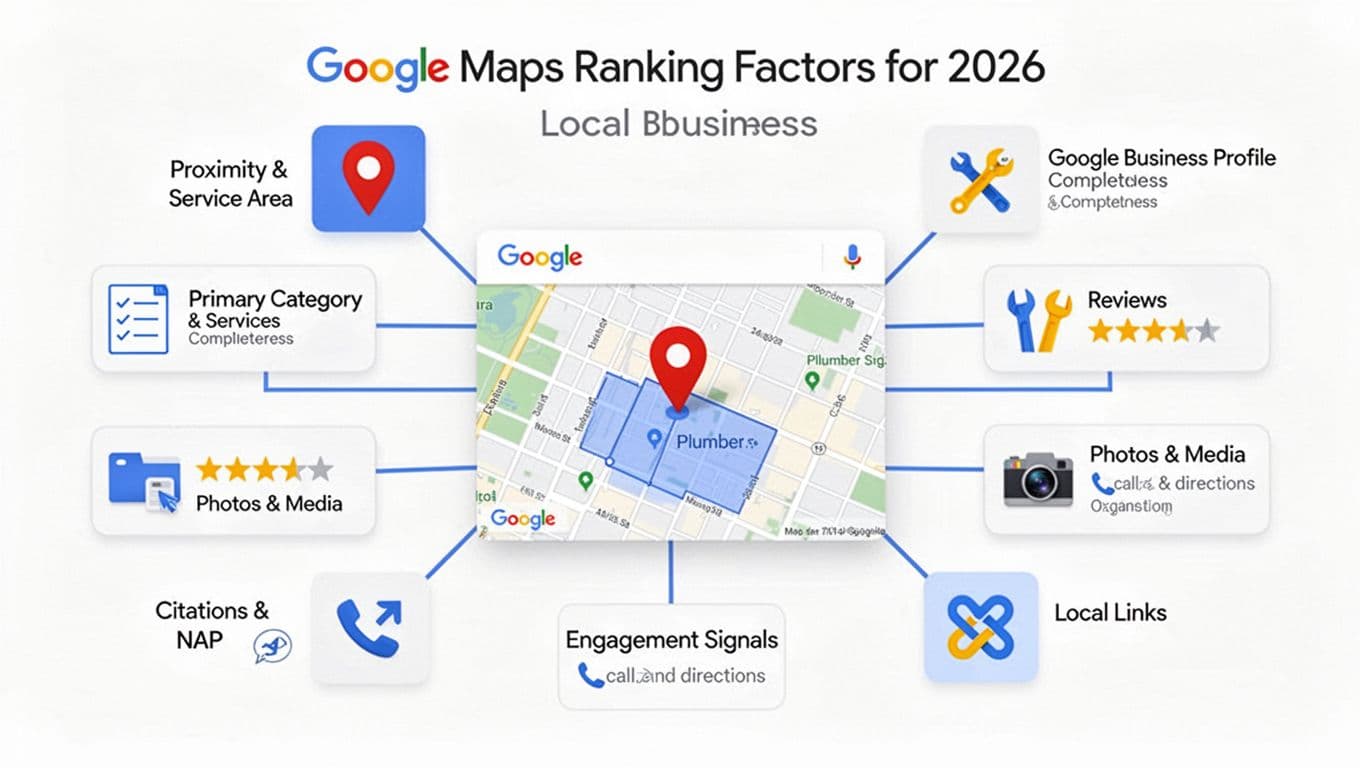
Google still explains local results using three pillars: relevance, distance (proximity), and prominence. Everything you do should support one of those. Distance is the hard truth you can’t “optimize” away, especially for service-area businesses. If a searcher sits across a metro, you’ll need stronger prominence to appear as often.
What’s changed is the level of verification Google seems to apply. Many local SEOs have observed that Maps responds faster to signals that look like real customer demand: calls, direction taps, appointment clicks, and steady review activity. These are best treated as observed correlations, not guaranteed ranking inputs, because Google doesn’t publish an exact formula.
Still, when multiple surveys and field tests line up, it’s smart to act. If you want a strong industry snapshot, scan Whitespark’s 2026 Local Search Ranking Factors and compare it to your own results. For a second viewpoint on Maps vs organic vs AI recommendations, Advice Local’s 2026 local ranking factors summary is a useful read.
Here’s a simple way to prioritize your work for local service businesses:
| Factor (2026) | What it influences | Impact for trades |
|---|---|---|
| Proximity and real address signals | Distance and trust | High |
| Primary category and service relevance | Relevance | High |
| Reviews (quantity, quality, freshness) | Prominence and relevance | High |
| GBP completeness (hours, attributes, services) | Relevance and trust | High |
| On-page location and service pages | Relevance | Medium |
| Local links and mentions | Prominence | Medium |
| Citation consistency and duplicates | Trust and entity matching | Medium |
| Photos, videos, media freshness | Conversion, possible correlation | Medium |
| Engagement (calls, clicks, directions) | Conversion, observed correlation | Medium |
| Spam fighting and profile hygiene | Eligibility and stability | High |
The takeaway: start with relevance and trust inside GBP, then back it up with reviews, clean data, and a website that matches what you sell.
If your category, services, and reviews don’t match the query, the rest is noise. Fix relevance before chasing “advanced” tactics.
Google Business Profile work that wins for plumbers, HVAC, roofers, and cleaners
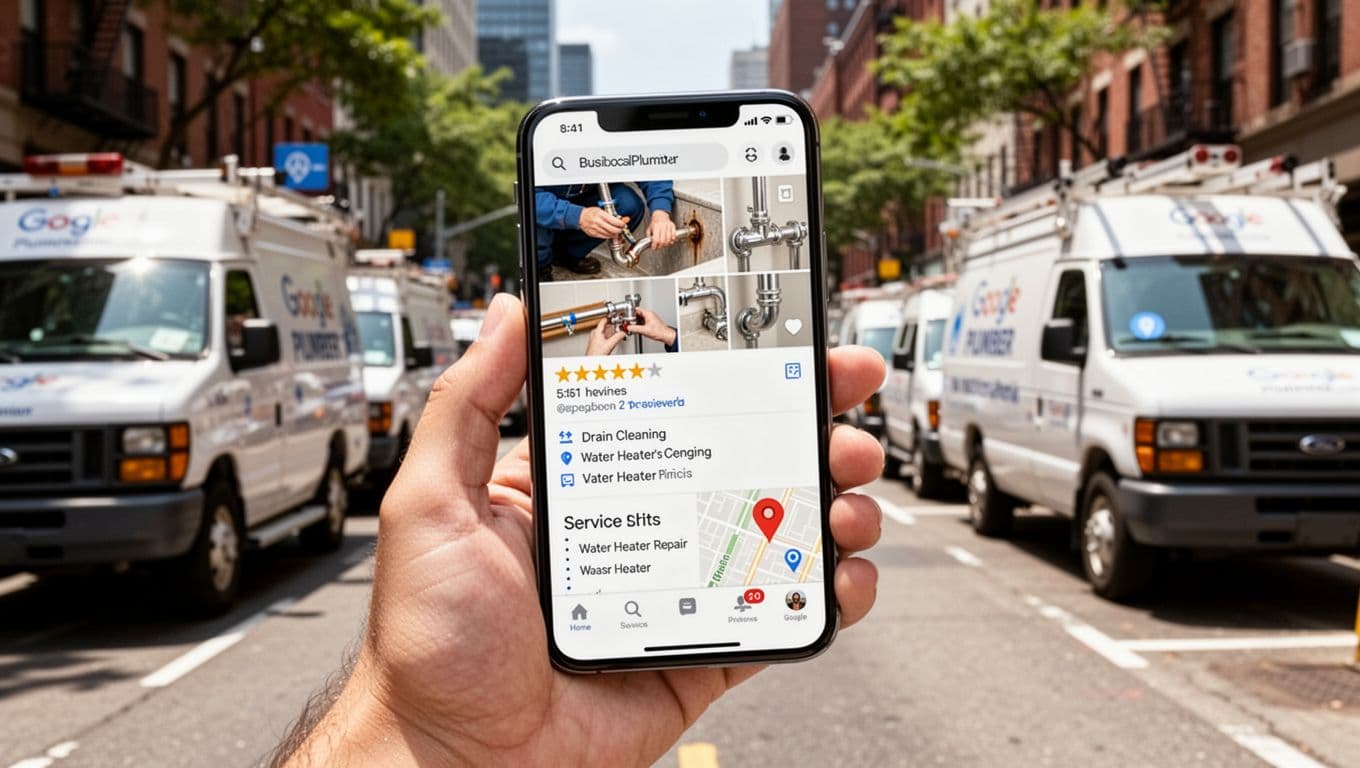
For most trades, the biggest wins come from GBP basics done with care, then maintained every month.
Categories and services (High impact)
Pick the most accurate primary category first, because it shapes what you can rank for. Then use secondary categories only when you truly provide those services at scale. A “Plumber” who also does “Water heater installation service” full-time is different from a plumber who did two water heaters last year.
Next, complete the Services section with your real offerings (drain cleaning, hydro jetting, leak detection, sewer line repair). Don’t write marketing copy. Write what people ask for at 10 pm.
Reviews acquisition and responses (High impact)
Reviews still behave like gravity. They pull visibility and clicks toward you when they’re steady and specific.
A practical pattern for trades:
- Ask at the right moment, right after a completed job and before the invoice email gets buried.
- Use one short link, sent by text, from a real person (tech or office).
- Encourage detail without scripting: “If you mention what we fixed (water heater, slab leak), it helps neighbors find us.”
When you respond, mirror the service and city naturally: “Thanks for trusting us with your tankless water heater in West Palm Beach.” That helps future customers, and it may help relevance signals.
Photos, videos, Q&A, and “Products” (Medium impact, strong conversion)
Fresh photos don’t just decorate a listing. They reduce doubt. Post before-and-after shots, team-at-work images, and simple short clips from jobs (no customer faces). Add a few exterior shots if you have a storefront.
Use Q&A like a mini FAQ. Seed common questions from your own account, then answer them clearly (financing, emergency hours, service boundaries). Also, fill Products (or service items) with your top jobs and starting price ranges when you can. Think of it as a menu, not an ad.
One more gotcha: keep hours accurate. For “emergency” searches, being marked closed can erase you from view when demand spikes.
Website, authority, tracking, and the “don’t get dropped” checklist
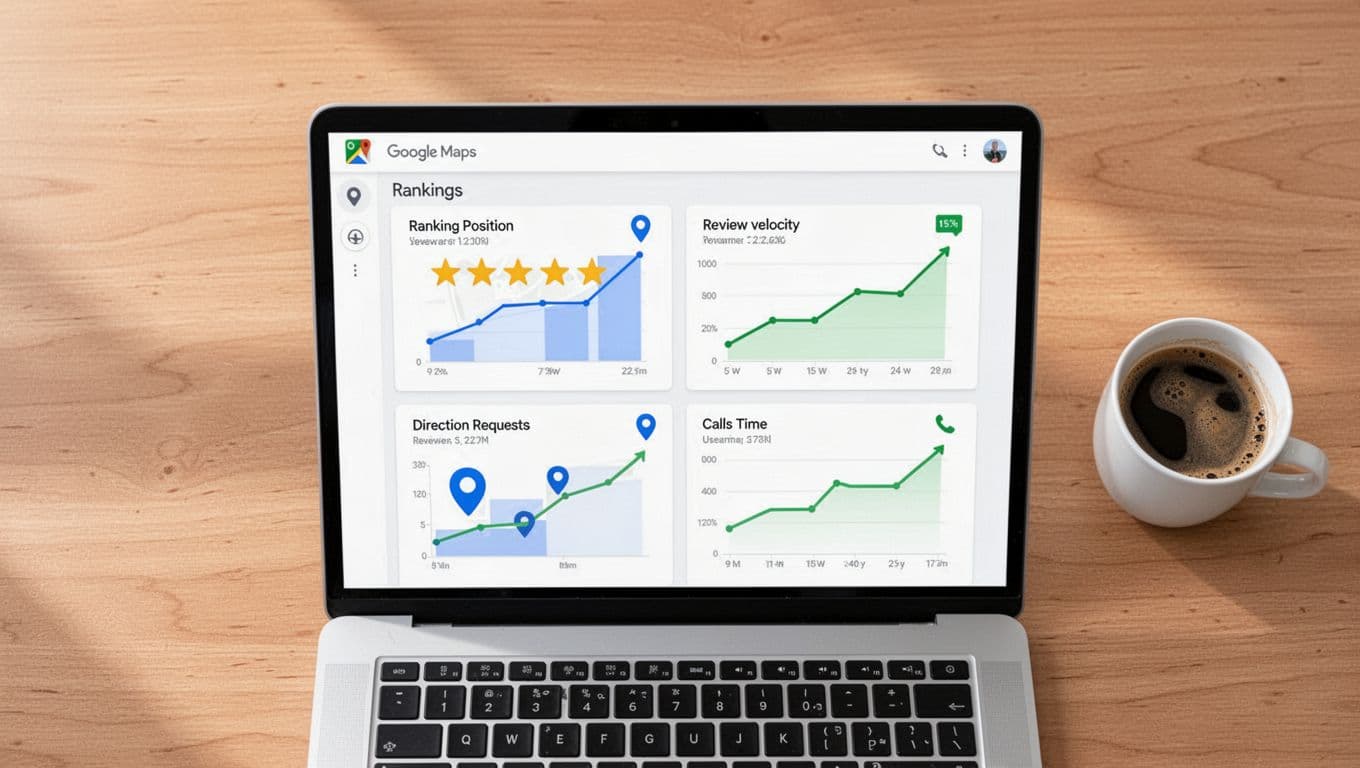
An AI-created analytics scene highlighting the core metrics to watch for Maps performance.
GBP can’t carry everything alone. Your website and off-site signals help Google trust that your listing represents a real business.
Local landing pages and on-page relevance (Medium impact)
Build service pages around what you do, then support them with location context. For example, an HVAC company should have strong pages for “AC repair,” “ductless mini-split,” and “heat pump installation,” plus a service area page that explains coverage.
If you create city pages, keep them honest. A roofer in Fort Pierce can have a “Roof Repair in Port St. Lucie” page if crews actually work there, with real proof (projects, permits, photos, FAQs). Thin copy that swaps city names is a risk.
Add basic LocalBusiness or Contractor schema where appropriate, especially NAP, service area, and reviews when allowed by guidelines.
Links, citations, and cleanup (Medium impact, stability boost)
Local links still matter because they act like third-party validation. Aim for real mentions: chambers, local sponsorships, supplier partner pages, trade associations, and niche directories that rank and get traffic.
Citations matter less than they used to, but bad citations still hurt. Clean up duplicates, old phone numbers, and mismatched addresses. For SABs, don’t scatter fake suite numbers across directories. Consistency beats clever tricks.
UTM tracking and behavior signals (Low to medium impact, high clarity)
Add UTM tags to your GBP website link and key appointment URLs so you can separate Maps traffic in analytics. Keep it simple, for example: utm_source=google&utm_medium=organic&utm_campaign=gbp. The goal is clean reporting, not fancy tagging.
Also, improve conversion on the profile itself: correct services, fast answers, strong photos, and a call-handling process that doesn’t miss leads. Better engagement often follows, and many teams see rankings stabilize after conversion fixes.
What to measure each month
Focus on a short dashboard:
- Map Pack and Maps rank tracking for your main services in your core ZIP codes.
- GBP performance (calls, messages, website clicks, direction requests).
- Call outcomes (answered rate, booked jobs, missed calls by hour).
- Review velocity (new reviews per week) and average rating trends.
Troubleshooting flow for sudden ranking drops
- Check for suspension or “needs verification” warnings in GBP.
- Search Maps for duplicates (old practitioner listing, old address, wrong name).
- Review recent edits (hours, category, address, service area). Undo risky changes.
- Look for review loss (removed reviews, filtered bursts, rating drop).
- Inspect competitors for spam (keyword-stuffed names, fake addresses). Report carefully with evidence.
- Audit citations and NAP for new conflicts (data aggregators often re-inject old info).
- Confirm your site and GBP still align (services, locations, phone number, and branding).
When rankings fall overnight, don’t “optimize harder” first. Prove the listing is eligible, unique, and accurate, then rebuild trust signals.
The rewards are great
Google Maps in 2026 rewards businesses that look real, act responsive, and match the searcher’s need. Start with the google maps ranking factors you control most: category and services accuracy, review momentum, complete GBP details, and clean business data. Then support it with strong local pages, reputable links, and tracking that shows what’s working. When your profile reads like the truth, Google has an easier job recommending you, and your phone rings more often.