
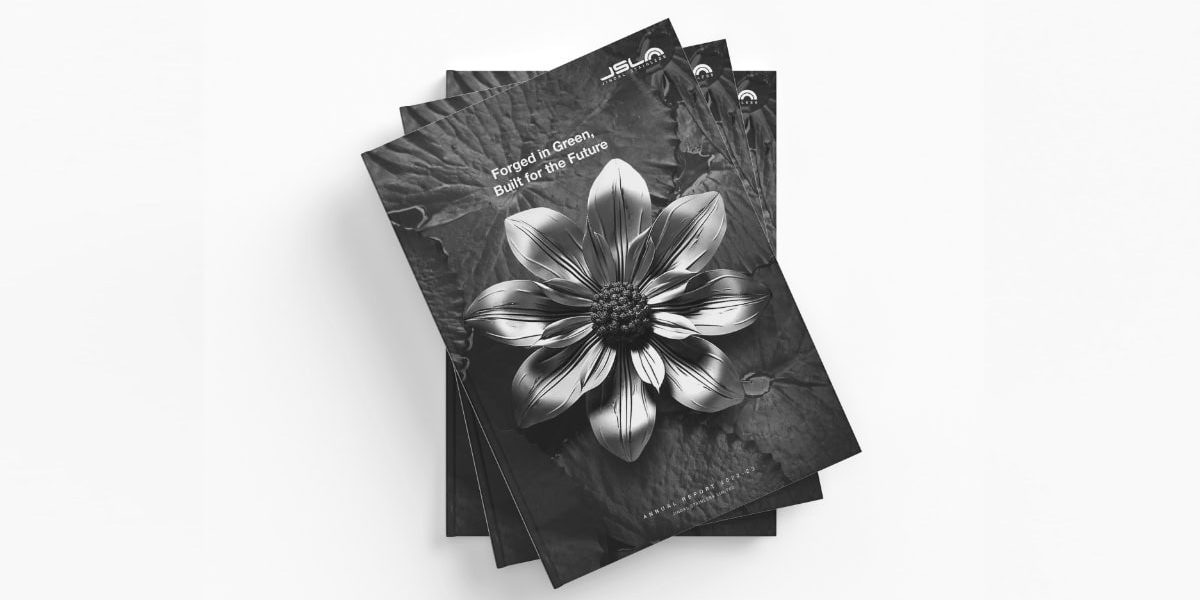
A donor stands near the exit after your gala, coat over one arm. In the other hand, they hold your annual report. It’s thick enough to feel real, the cover soft, the photos sharp. They don’t say much at first. They just thumb to a page, pause on a story, and nod like they’ve met your mission in person.
That moment is hard to copy with a PDF link.
Still, print isn’t cheap. Digital is quick, shareable, and easy to update. So where does that leave the printed annual report for nonprofits in March 2026? This post answers three things in plain terms: when print still works, when it doesn’t, and how to choose a smart mix that supports trust, fundraising, and accountability.
Why print still matters to some donors and communities
A printed annual report doesn’t compete on speed. It competes on attention. When people hold something in their hands, they tend to slow down. They read like they’re listening, not skimming.
That matters because many nonprofits don’t have an awareness problem. They have a confidence problem. Supporters want to feel sure their gift didn’t vanish into the ether. A good report helps them see where the money went, and who it helped, without making them work for it.
Print also fits real life. Not everyone reads long content on a phone. Some supporters share a report at the kitchen table or in a board meeting. Others leave it on a desk where it gets read twice.
None of this means print is for everyone. It’s for the right audience, at the right moment, with the right purpose.
A physical report can feel more trustworthy than a link
A link can feel light, even when the work behind it is heavy. Print sends a different signal: “We planned this, we finished it, and we’re here next year too.”
That sense of stability matters most with:
- Major donors who want more than a receipt
- Foundation partners who expect clear reporting
- Board members who need a shared reference
- Legacy givers thinking in decades, not months
Print also carries perceived effort. When someone sees a carefully edited report, they assume care went into the programs as well. That may not be fair, but it’s human.
Picture this: a longtime donor flips straight to the impact section. They stop on one spread, read the caption, then re-read a quote. Online, that same person might click, scroll, and bounce in 30 seconds. On paper, the pause lasts longer, and the message sinks in.
A printed report doesn’t just deliver facts, it creates a slower pace where trust can grow.
Print shines at in-person moments where relationships are built
Nonprofits raise money through relationships, and relationships grow in rooms, not inboxes. Print works best when you can hand it to someone and talk.
A few places where a printed annual report earns its keep:
At donor meetings, it gives your team a shared map. At community fairs, it becomes a simple takeaway that doesn’t require Wi-Fi. In a lobby, it signals that your organization has a story worth reading. During volunteer orientation, it helps new people understand the why, not just the tasks.
The report can also act as a quiet “conversation prop.” Someone points to a photo and asks a question. A board member circles a metric and says, “Tell me more about this.” Those small moments often lead to bigger gifts later, because the supporter feels connected, not marketed to.
The real downsides nonprofits can’t ignore
Print has friction. It costs money up front. It takes time. It can create waste if you guess wrong on quantity. For lean teams, that friction matters.
There’s also a simple truth that stings: the moment you print a number, it starts aging. A program might change. A new grant might land. A crisis might shift your priorities. Then your report can feel out of date before it even hits mailboxes.
Accessibility is another concern. Some readers need larger type, higher contrast, or screen readers. If you only print, you risk leaving people out.
These downsides don’t mean “never print.” They mean “print with intention.” Small, targeted runs reduce waste, and a strong digital version fills the gaps.
Budget and sustainability trade-offs, and how to talk about them clearly
Printing and mailing can eat a surprising chunk of a small nonprofit budget. Paper, design, proofs, postage, and staff hours add up fast. Even if your vendor gives a discount, supporters may still wonder why donor dollars paid for a glossy booklet.
The answer isn’t to hide the choice. It’s to explain it in human terms. If you print, tie it to stewardship and fundraising outcomes, not tradition. Also, make the report feel modest and purposeful, not flashy.
A few practical ways to lower cost and waste without killing quality:
- Keep the print run small and aimed at key groups
- Use recycled paper and lighter-weight stock
- Trim page count, tighten writing, and reduce “filler” photos
- Print locally when possible to limit shipping
- Skip bulk mail if hand delivery works better
- Use print-on-demand for small quantities and reprints
If someone asks, “Why print at all?” you can answer simply: “We print for our top supporters and partners because it helps stewardship. Everyone else can read it online.”
Accessibility and equity, because not everyone reads print the same way
Print can be accessible when you design it well. Larger type, clean fonts, strong contrast, and plain language help many readers. You can also offer translated inserts or a bilingual edition if your community needs it.
Still, digital often wins for accessibility features. Screen readers, text resizing, and high-contrast modes can make a huge difference. Digital also helps people with limited mobility who may not want mail, and supporters overseas who will never see a physical copy.
The simplest approach is choice. Offer both formats, and let supporters pick what works for them. A short line on your donation form, “Print or email?” can reduce waste and improve the supporter experience.
A simple decision checklist: when to print, when to go digital-only
If your team feels stuck, use a plain test. Don’t start with “Do we like print?” Start with “What will it do for us?”
Answer these as yes or no:
- Do we have a defined group that prefers print (or rarely reads email)?
- Will this report support major gifts, planned giving, or board work?
- Can we hand-deliver copies at meetings or events?
- Do we have a clear fundraising goal tied to the report?
- Does our story need a keepsake format to land well?
- Are the key numbers stable enough to print for 6 to 12 months?
- Do we have staff time to edit tightly and manage distribution?
- Can we measure results (responses, meetings, gifts, feedback)?
- Can we produce an accessible digital version either way?
If most answers are “no,” go digital-only. If several are “yes,” print can make sense, but keep it targeted.
A strong default for many nonprofits is digital-first, with print reserved for high-touch relationships and in-person moments.
Print makes sense when it supports a fundraising goal you can name
Printing “because we always do” is not a strategy. Printing to help close gifts is a strategy.
Print often pays off when you can connect it to a clear ask or a clear relationship step. For example, a planned giving prospect may appreciate a report they can keep and revisit. A major donor meeting goes better when you can open to one page and talk through it together. Board packets sometimes work best in print, because decisions feel clearer when everyone sees the same spread.
Print can also support a capital campaign. In that setting, the report is less about “look what we did” and more about “here’s the proof we can do it again, with you.”
Go digital-only when speed, updates, and reach matter more than keepsake value
Digital-only is the right choice in many cases, and it’s not a downgrade. It’s a format match.
If your programs change often, print can trap you in yesterday’s numbers. If you report weekly or monthly metrics, a living web page works better. If you serve a global audience, mailing costs can swallow your budget.
Digital also handles rich media. Short videos, audio quotes, interactive charts, and photo galleries can tell the story with less paper and less friction. Sharing becomes easy, and supporters can forward your impact in seconds.
Just don’t treat digital like a dumping ground. A 40-page PDF on a phone still feels like homework. If you go digital, design it for scrolling, clarity, and quick wins.
How to make a printed annual report worth the paper
A printed annual report should feel like a short story with proof, not a long brochure. Tight writing matters more than fancy finishes. A strong sequence matters more than extra pages.
Before you worry about coatings or binding, get the core right: one message, one emotional thread, and simple evidence that backs it up. Then distribute with care. A report that sits in boxes helps no one.
Tell one clear story, then back it up with simple numbers
People remember stories, and they trust numbers when you give them context. So give both, in a clear order.
A simple narrative arc works well:
The need, your response, the results, and the next step.
Then add a small set of metrics that match your mission. Three to five key numbers often beat a long list. Pair each number with a plain sentence. “312 families housed” means more when you add, “That’s 48 more than last year, after we opened a second site.”
Include a short financial snapshot, not a wall of accounting language. Many readers want to know two things: where the money came from, and where it went. A simple chart can help, but clean labels matter more than style.
Donor thanks should feel personal. A short note that speaks like a human beats a long list of names with no warmth. End with a direct call to action that fits the reader, such as a meeting request for major donors, or a monthly giving invite for broad supporters.
Use photography and design that feel honest, not staged
Photography can build trust faster than paragraphs, but only if it feels true. Supporters can sense when an image looks like a stock ad. They relax when they see real people in real spaces, doing real work.
Aim for photos that show relationships, not just services. A volunteer listening. A staff member teaching. A family smiling because something changed.
Keep captions short and clear. Get permissions every time, and store them well. Also, avoid cluttered pages. White space gives the reader room to breathe. Choose readable fonts, and don’t shrink type to cram in more copy.
Finally, connect print to digital with one simple tool: a QR code. Link it to the full digital report, a donation page, or a short video. That way, the printed report becomes a doorway, not a dead end.
It still matters today, possibly into the future
Printed annual reports are still relevant for nonprofits when they serve a clear audience and purpose, and when a digital option stays available. Print works best as a targeted relationship tool, not a mass habit. Digital works best for speed, reach, and updates, and it can still feel warm with good storytelling. Pick your primary goal, choose your audience, decide the format mix, set a small print run, and measure what happens, especially meetings booked, gifts received, and honest feedback. Then take one step this year that improves clarity over tradition.