

A hundred weak directory links won’t beat one trusted mention from your town’s chamber, supplier, or community paper. That gap matters more in 2026 because search results now blend Maps, organic listings, reviews, and AI-generated summaries into one crowded page.
For plumbers, HVAC companies, roofers, electricians, landscapers, med spas, dentists, lawyers, and other service brands, local link building still works when it looks like real life. The best links come from real relationships, useful local content, and community trust. Start there, and the rest of your local SEO gets stronger.
Why local links still matter in 2026
Local links are not the same as citations, and service businesses often mix them up. A citation is a business mention, usually with your name, address, and phone number, on sites like directories, map apps, and local business listings. A local link is a clickable link from another site in your area or industry that points to your website.
That difference matters because local links help with prominence, which is still one of the main ideas behind local search visibility. If you look at these Google Maps ranking factors for 2026, you can see why. Distance is fixed. Relevance comes from your pages and profile. Prominence grows when other trusted sites mention and link to you.
This quick comparison keeps the two signals straight:
| Signal | What it looks like | Example | Main value |
|---|---|---|---|
| Citation | Business mention, with or without a link | Apple Maps, Yelp, local directories | Confirms business details and location |
| Local link | Clickable link to your site | Chamber member page, sponsor page, local news story | Builds trust, authority, and referral traffic |
Citations help search engines confirm where you are. Local links help them judge how much your community trusts you.
You need both. Citations are the floor. Local links help raise the ceiling.
There’s another reason these links matter now. Search engines are better at reading context across the web. If a local news story quotes your roofer after a hailstorm, or a school fundraiser thanks your dental office with a link, that says something no bulk directory package can say. It ties your brand to a place, a service, and a reputation.
That doesn’t mean you need dozens every month. Local link building works best when it supports the rest of your SEO and marketing. A handful of strong, relevant links can do more than a spreadsheet full of junk.
Also, don’t stop at Google. Listing consistency still matters across Apple and other map ecosystems, so an Apple Business Connect checklist is worth reviewing while you clean up your broader local presence.
Build pages people feel safe linking to
Before outreach starts, look at the page you want people to link to. Would a chamber director, reporter, school admin, or neighborhood blogger feel good about sending visitors there? If the answer is no, fix that first.
Website design matters here because people judge credibility in seconds. If your page feels dated, loads slowly, or hides the service details, the link ask gets harder. Website maintenance matters too because broken images, stale promotions, dead pages, and old staff bios make your company look neglected.
A good local link target usually has four things: a clear service promise, a strong local angle, proof, and an easy next step. For a plumber, that could be a page on emergency leak repair in a specific county. For a dentist, it might be a first-visit guide for parents in your city. For a med spa, it could be a treatment prep page with safety notes, FAQs, and local office details.
This is where SEO and user experience overlap. If your city pages are thin or nearly identical, outside sites won’t want to reference them. If your service pages answer real questions, link building gets easier because you have something worth citing.
Strong branding helps more than many owners expect. When people remember your name, logo, trucks, and tone, they’re more comfortable mentioning you. That doesn’t mean every page needs polish for its own sake. It means the business should look real, stable, and useful.
Your pages also need the right local intent baked in. A clean local SEO keyword research guide can help you map actual jobs to actual places, so your outreach points to pages that match what nearby customers search.
In other words, don’t send every link to the homepage. A sponsor page should often point to the most relevant city or service page, not the front door.
Start with the easy local link wins you already own
Most service businesses don’t need cold outreach first. They need an inventory.
Start with the people and groups that already know you. Local chambers, trade associations, business networking groups, suppliers, manufacturers, referral partners, charities, youth sports teams, schools, and event organizers often have pages where your business can be listed or featured. These links are easier to earn because there’s already a relationship in place.
Many current 2026 playbooks on local link building strategies still put chambers, sponsor pages, and partner mentions near the top for one reason: they are practical, local, and repeatable.
A chamber membership alone is not enough. Ask for the pieces around it. Member spotlight pages, event recaps, speaker bios, award announcements, and community guides can all carry a stronger signal than a plain directory listing.
The same idea applies to vendors and partners. If you’re an HVAC installer, ask brands you carry whether they feature local contractors. If you’re a roofer, talk to your gutter, solar, or insurance partners about a referral resources page. If you run a med spa, look at wellness partners, local beauty events, and physician referral pages. Lawyers can earn links from bar associations, nonprofit legal clinics, and local business groups. Dentists often miss school resource pages and family event sponsors.
Here are some of the easiest wins for small teams:
- Ask your chamber for a member spotlight, not only a directory listing.
- Check whether your manufacturers or suppliers list approved local providers.
- Reclaim unlinked brand mentions from local blogs, news sites, and event pages.
- Support one real community event and request a sponsor page that links to the right service page.
- Trade referral resource pages with trusted, non-competing local businesses.
The outreach itself should stay simple. “We noticed our business was mentioned on your event page. Would you mind linking our leak repair page so homeowners can find the checklist?” works better than a long SEO pitch.
Because these are relationship-first links, they tend to last longer. They also drive better traffic. A sponsor page on a site locals use is worth more than a random blog no one reads.
Turn expertise into links with local resources and events
Publish guides your town will actually use
Useful local content gives people a reason to mention you without feeling sold to. That’s the heart of sustainable local link building.
A landscaper can publish a county-specific planting calendar. An electrician can create a hurricane season generator safety page. A roofer can post a storm damage photo guide for homeowners. A dentist can write a calm, practical guide for first pediatric visits. A lawyer can create a city-specific accident checklist that explains what to document after a crash.
The key is local detail. Use the city name when it belongs. Mention weather, permit rules, neighborhood housing stock, seasonal issues, or common homeowner mistakes in your area. Add original photos, staff quotes, and plain answers. That turns a generic article into a page a neighborhood association, HOA blog, school newsletter, or community Facebook-linked website may actually reference.

This type of asset also supports broader marketing. A solid guide can feed email campaigns, social posts, sales follow-up, and your Google Business Profile updates. One good page can do a lot of work.
Teach something in public
Workshops, webinars, and local talks are still underrated link sources. They create a clean reason for community calendars, host venues, chambers, business groups, and local blogs to mention you.
An HVAC company might run a free “Lower summer cooling bills” workshop at a library or home expo. A med spa can host a skincare Q&A with a local fitness studio. A law firm can speak to a neighborhood association about contract red flags after storms. Each event creates a trail of pages that can link to your site: registration page, host page, recap post, partner page, and sometimes local press coverage.
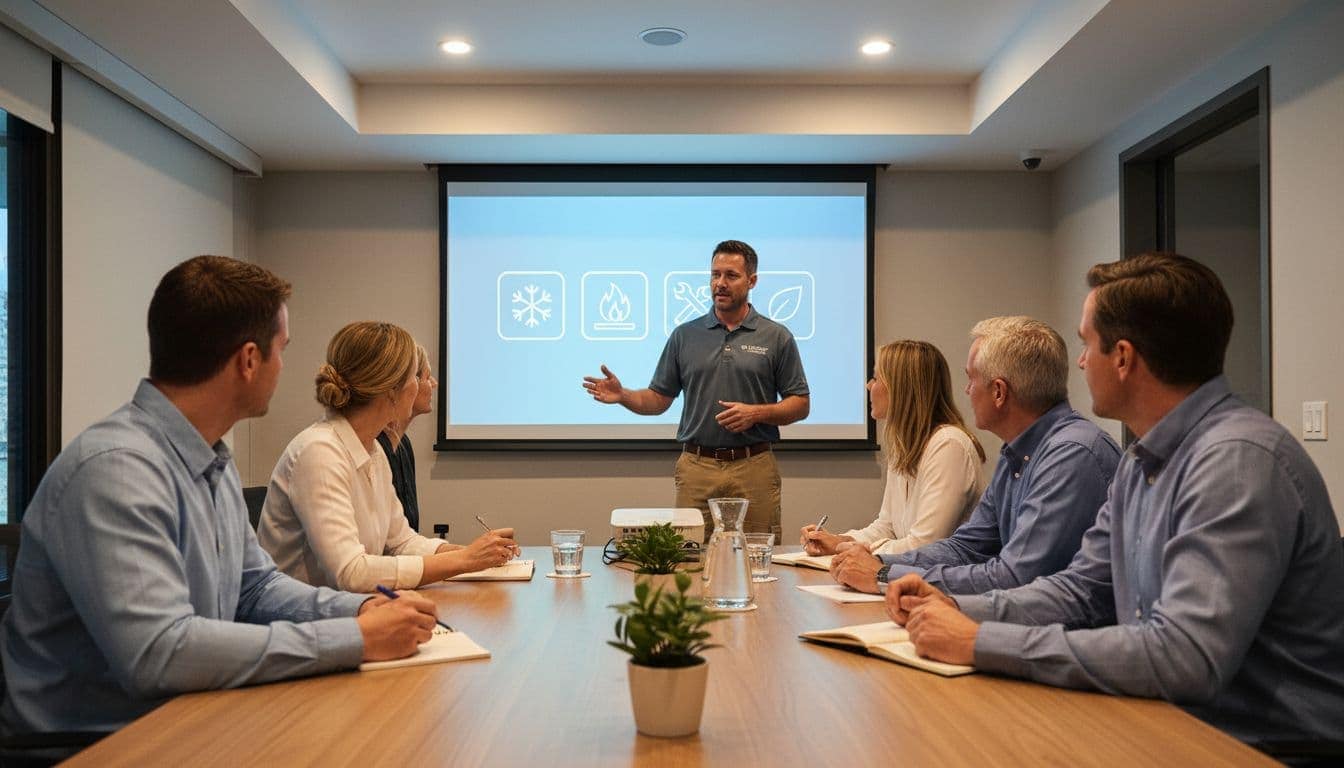
That fits the broader advice in QuickSprout’s local SEO plan for service businesses, which treats local links as part of a wider trust system, not a stand-alone trick.
Pick topics that solve a real local problem. Then make the landing page useful enough to keep after the event ends. Add takeaways, photos, and a short recap. Now the page can keep earning links long after the chairs are folded and the coffee is gone.
Outreach that sounds like a person, not a template
Most link outreach fails because it reads like a form letter. Editors, community managers, and business owners can smell that in one line.
Good outreach starts with fit. Why does your page help their audience right now? If you can’t answer that in a sentence, don’t send the email yet.
For example, a roofer emailing after a hailstorm has a timely angle. A dentist reaching out to a parenting blog before back-to-school season has a timely angle. A landscaper offering a spring irrigation checklist to a neighborhood resource page has a timely angle. Timing turns a cold note into a relevant one.
Use short emails. Mention the specific page you saw. Offer the exact resource. Keep the ask small.
“We put together a storm prep checklist for homeowners in Indian River County. Your seasonal resources page looks like a good fit if you update it each year.”
That works because it sounds human. It also respects the other person’s time.
Anchor text matters too. Ask for brand mentions or natural phrases, not exact-match keyword stuffing. “Jones & Jones leak repair guide” or “local storm prep checklist” is fine. “Best emergency plumber Vero Beach” as forced anchor text looks fake.
In 2026, digital PR is also part of the local link mix. You don’t need a giant study. A short data story can work if it is grounded in your market. An electrician might summarize the most common panel upgrade questions from local homeowners. A med spa could share anonymized treatment trends by season. A lawyer can comment on a local issue tied to new rules or court backlogs. Reporters and bloggers need clear, usable material, not hype.
This is where branding and marketing start to pull together. A known local business with a clear voice gets more replies than a faceless outreach account. People link to people they trust.
Common mistakes, and the numbers that matter
The biggest mistake is chasing volume. Local link building is not a coupon bin where more is always better. Cheap directory blasts, private blog networks, spun guest posts, and irrelevant sponsorship farms can waste money and muddy your profile.
Watch for these common problems:
- Buying local links in bulk from sites with no local audience.
- Treating citations as if they are the whole off-site strategy.
- Pointing every new link to the homepage.
- Using exact-match anchors that read like spam.
- Ignoring the landing page after the link goes live.

Another mistake is forgetting referral value. Some owners obsess over whether a link is “strong” while ignoring whether it sends a single visitor. A chamber link that drives calls is worth more than a fancy metric on a site your market never sees.
Track a small set of signals instead. Look at referral traffic to the linked page. Check form fills, calls, or booked consults that follow. Watch branded search lift in Search Console. Compare rankings for the page that received the link. Then review your Google Business Profile performance, especially if the links support nearby service intent.
Keep notes beside each link. Where did it come from? What page did it point to? Did traffic or leads change after it went live? Small teams win here by staying organized, not by buying more software.
Also, give links time to work with the rest of your SEO. A new mention on a local news site may not move rankings overnight. But paired with strong service pages, fresh reviews, solid citations, and regular website maintenance, it can help tip a close race in Maps and organic search.
Start building trust
The best local links still come from the same place they always have: local trust. When your business is useful, visible, and active in the community, links grow out of that work instead of feeling forced.
Start with the assets and relationships you already have. Tighten the page you want to promote, ask current partners for the obvious mentions, and create one helpful local resource people can point to. That steady approach beats shortcut chasing, and it holds up far better in 2026.